Facilities & portfolio teams
Operators of offices, warehouses, restaurants and multi-floor buildings who need a clearer view of spaces, equipment and daily operational issues.
Auvryn · Facilities, IoT & operational intelligence
Turn scattered building data into a clearer operational picture. Connect spaces, equipment and maintenance so your team can find the issue, coordinate a response and verify recovery.
Explore an Auvryn pilot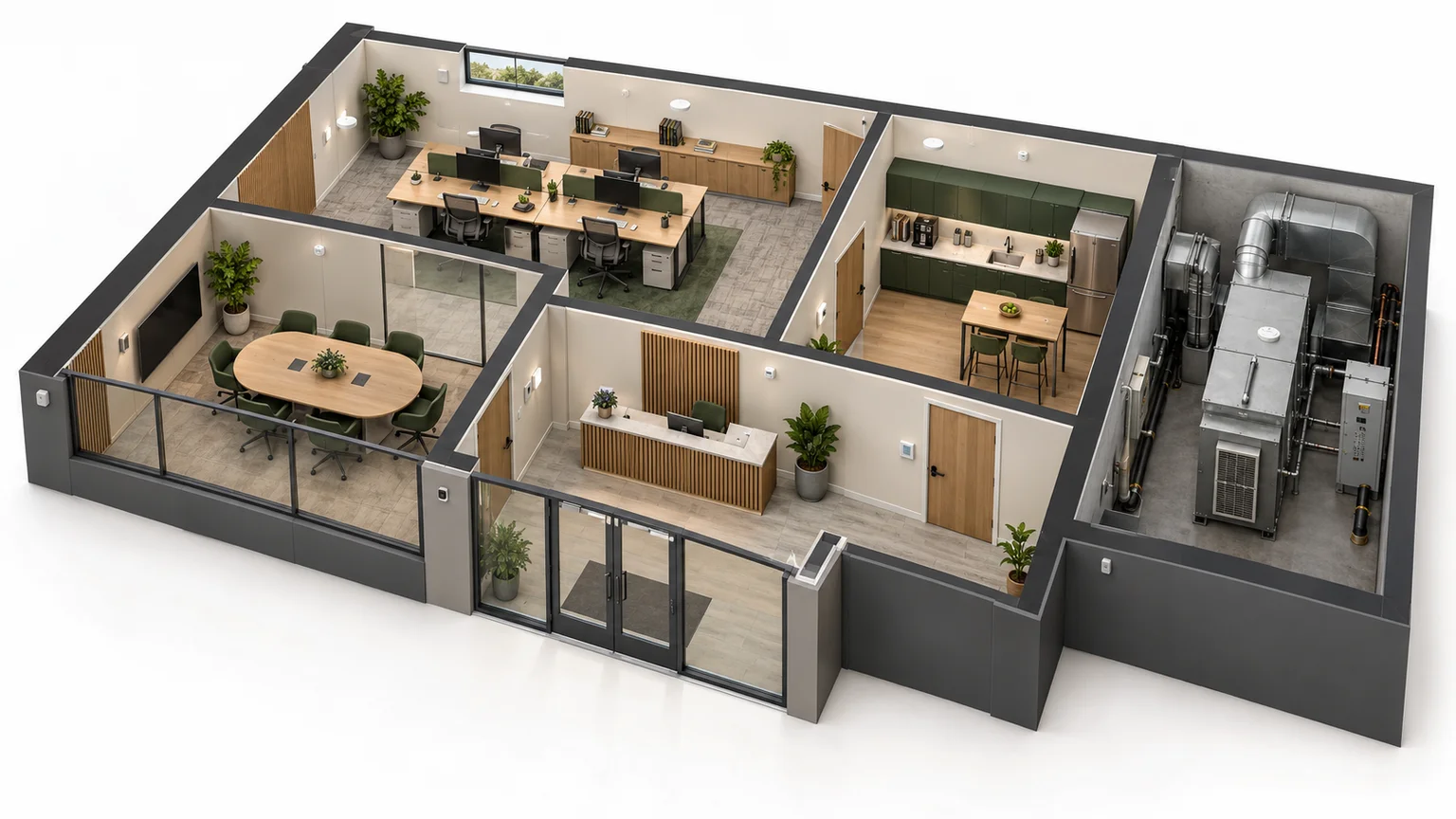
Spaces, assets and building systems in context. Illustrative facilities model.
The opportunity
A high energy reading means little without knowing the room, equipment and activity behind it. Auvryn connects that context: spaces, IoT readings, resource use and maintenance in a shared operational view. Teams can investigate an issue, assign work and review the evidence of recovery. An optional manufacturing extension adds equipment and shared-utility relationships alongside the building and maintenance systems you already use.
Explore a working demonstration with fictional sites and simulated equipment. Read-only connections can be assessed for a customer pilot. Physical controls remain simulated; live control needs separately commissioned interfaces and approval. Performance and savings are measured for each deployment.
Follow the experience
Follow the walkthrough, or select a step to explore how Auvryn connects the work.
01 / 04
Agree the operational question, map spaces and equipment, then assess the data sources and permissions needed to answer it.
02 / 04
Bring readings, equipment relationships and operational history together so teams can inspect the evidence before choosing a response.
03 / 04
Coordinate investigation, maintenance or a proposed workflow around site constraints, responsibilities and approvals.
04 / 04
Review subsequent observations and recovery evidence against an agreed baseline. Record what improved and what still needs attention.
Explore the capabilities that matter to your team.
Explore buildings, floors, rooms and equipment through a spatial view that connects an observation to the place and asset it belongs to.
Connect approved equipment and building readings without changing physical controls. See where a value came from, how current it is and which asset it describes.
Investigate electricity and water use alongside occupancy and equipment activity. Distinguish measured readings from estimates before choosing where to focus.
Move from an alert to supporting evidence, an investigation and assigned work. Review subsequent readings to establish whether the issue has actually been resolved.
Explore a condition-and-action workflow before putting it into service. Tests, approvals and manual holds keep teams in control; device actions are demonstrated in simulation.
Explore how a machine issue relates to shared utilities, production constraints and maintenance. A representative LED assembly demonstration makes those dependencies visible.
Who it’s for
Operators of offices, warehouses, restaurants and multi-floor buildings who need a clearer view of spaces, equipment and daily operational issues.
Engineers, technicians and sustainability leads connecting resource use, equipment condition, investigation and maintenance follow-through.
Manufacturing and reliability teams exploring how equipment observations, utility dependencies and maintenance decisions fit together.
Why Auvryn
Understand the room, equipment and utility behind an alert. Auvryn connects those relationships to the work needed next.
Teams can trace an issue to its source and distinguish measured facts from estimates or simulation before deciding what to do.
Start with the building, maintenance and manufacturing systems you already rely on. Add operational context through an agreed integration scope, without a wholesale replacement.
Questions, answered
No. Facilities management, IoT observations, maintenance, energy and resource insight form the foundation. Offices, warehouses, restaurants and multi-site buildings are relevant use cases. Manufacturing intelligence is an optional extension.
The working demonstration uses simulated controls. Supported connected integrations are read-only. Live physical control would require a separately commissioned interface, explicit permissions, safety review and customer acceptance; it is not enabled by the demonstration.
We start with a defined operational problem, a site and equipment inventory, available readings and an accountable site owner. Together we agree the observation scope, access permissions, baseline and success measures before connecting approved sources. Energy savings and reliability outcomes are measured for your environment, not promised in advance.
Start a focused conversation
Which site or recurring issue deserves a clearer answer? Share your equipment, available data and current maintenance process. Let’s define a focused pilot with measurable success criteria.
Prefer a general conversation?